Thursday, May 18, 2006

Of Blogging & "Knowledge Packages"

What struck me as I read this interview was the idea that blogging facilitates what is, in essence, a continuous process of identity development. It supports the synthesis and analysis of individual topics, facilitates recursive exploration of those ideas, and ultimately results in the production of a series of pre-fabricated "knowledge packages" (to quote Liping Ma) that are relatively easy to incorporate into larger works. My personal experience with blogging suggests that it goes a few additional steps. When I take the time to post to my blog, I find that it seems to function on both an emotional level and a cognitive level as a way of helping me to incorporate thoughts, understandings, feelings, and ideas into my conceptual framework in ways that ultimately support my ability to integrate them into the fabric of my life.

Mixing Methods

While cleaning up old e-mail, I was investigating the abstracts of a journal on Alegebraic Combinatorics. (Don't ask!) The keywords in the abstract for an article entitled, A Basis for the Non-crossing Partition Lattice Top Homology led me to some very interesting things. [By way of explanation, that particular article caught my eye for two reasons--the term lattice evoked an image of Rand Spiro's criss-crossing landscapes in my mind (which are of interest to me), and the idea of a lattice that didn't cross and wasn't partitioned was also intriguing to me].

I wanted to see a picture of what such a lattice might look like, so I did a quick image search for stack sortable permutation (not in quotation marks). It led me to this Wikipedia article in German. My German isn't so hot, but the diagram in the article intrigued me (as did the title of the article--Quicksort). So, I took the time to look for more clues and found the neat little link on the side that lets you try it out in English. Unfortunately, the English and the German articles do not contain identical information. However, they are similar enough for me to make sense of the German page. As I read both articles, I realized that math idiot that I am, I could still make sense of the concepts because of prior work I had done with pivot tables in Excel.

So why do I care about this abstract, mathematical stuff anyhow? Because it seems to me that this idea of partitioning can be combined with the concept of constant comparative analysis and then applied to the analysis of qualitative data. It also intrigues me because the examples given in both the German and the English articles are so visual, and I think being able to visually represent data is important (not only when one is ready to present it, but also during the analysis stage when one is trying to make sense of it). Different representations privilege or foreground different patterns, and that helps the researcher to see things that might previously have been invisible.

Now, add to the idea of inserting a partition or dividing line of sorts into the data and then sorting on either side of it, the concept of then organizing the data on either side of the partition in terms of binary sets. The images in this article on binary trees help illustrate this--especially those near the end. What I like about this idea is that sorting them in terms of binaries might help the researcher to allow outliers to remain inside the data set and, in so doing, to interpret the data with more accuracy.

Sunday, January 08, 2006

The Conversation Connoisseurs

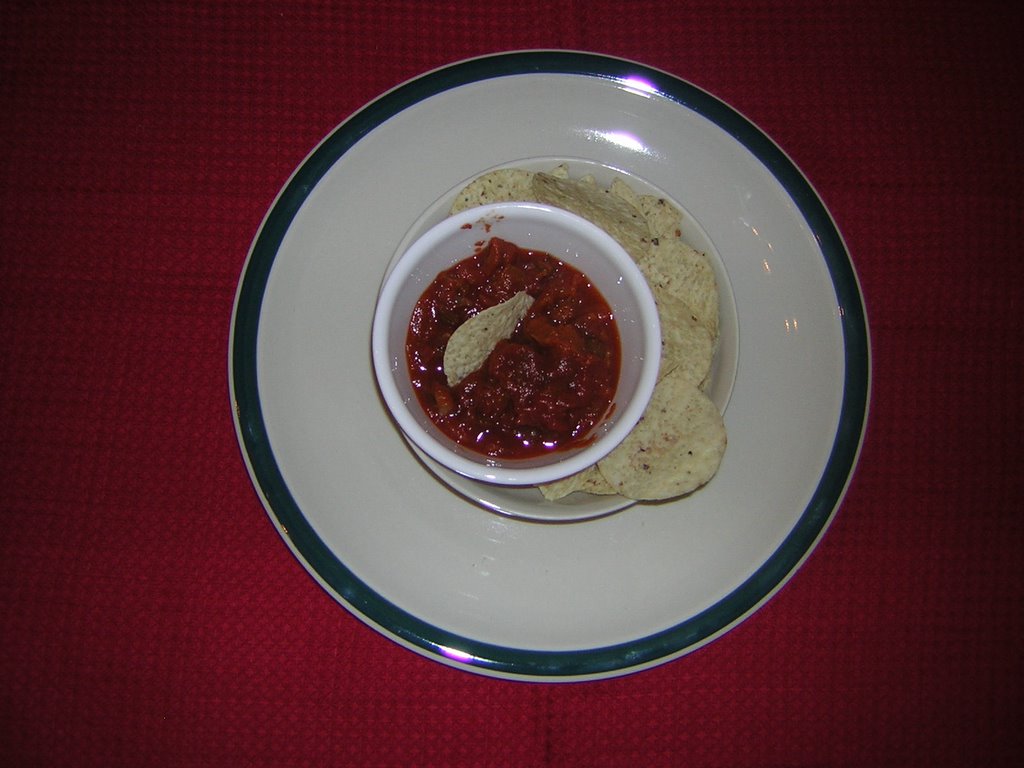
Someone gave me the unexpected gift of a scintillating conversation on New Year's Eve. (Yes, I also did "fun" things like play Karaoke Revolution and Dance, Dance Revolution!) We got to chatting about why "good" conversations are so uncommon and about what makes a conversation a "good" one. As we talked we determined that most conversations are "chips and salsa conversations"—small talk that requires almost no preparation and very little knowledge of the other person. It spices up our lives a bit (depending, of course, on the brand of salsa) and the "chips" momentarily satisfy our hunger for social contact.


We decided that the second most common kind of conversations are "M&M conversations"—spontaneous, exchanges of banter that come in a variety of fun colors and flavors. Their candy-coating of fun tends to "melt in your mouth, not in your hands," but once you have ingested them and the delectable chocolate of playfulness that encases them dissolves, sometimes nothing else remains. Every once in awhile though, you may get lucky enough to find a tiny bit of substance (a.k.a. a peanut) at the core! Hence, their layered nature makes them a little more complex than "chips and salsa" conversations in many ways, and requires that the participants know one another to some extent (after all, some people are deathly allergic to peanuts!).


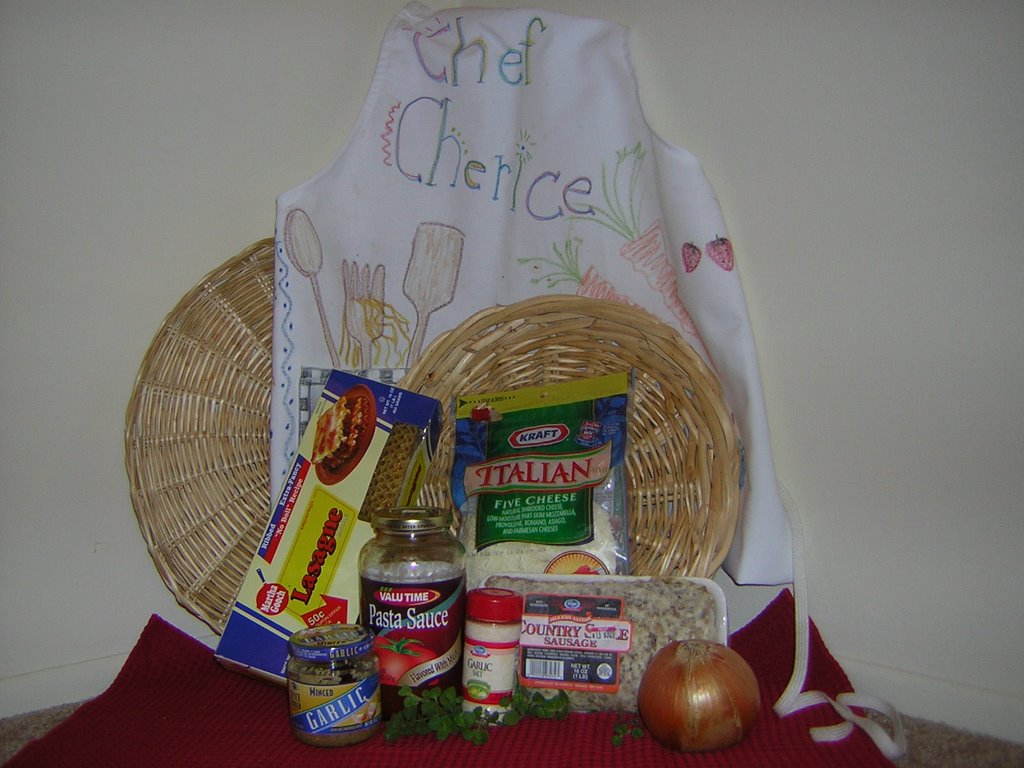
We termed the least common kind of conversations "lasagna conversations." These kinds of conversations consist of a wide variety of ingredients, demand quite a bit of preparation, and require a great deal of "cooking time" (i.e. it would be difficult to have such a conversation in the space of just a few minutes unless participants were to pre-cook some of the ingredients). When well-prepared, "lasagna conversations" are much more flavorful, nutritious, and satisfying than other conversations. However, many people avoid "making" such conversations because they are more expensive in that they require a greater investment of self, involve more effort, and require more skill. It takes both experience and practice to whip up a tasty one!

Gotta love lasagna (well, actually, I can think of a lot of other foods that I would prefer over lasagna, but for the sake of the metaphor . . . )!

Wednesday, December 14, 2005

For My Friend

When your voice collapsed,
I knew your world had too.

So many layers
Of life
And so much love
Suddenly in pieces
On the floor of your heart.

Sharp shards of
Piercing pain
Etch grief
On every surface
Of the soul.

Heartfelt words
Echo hollowly--
Emphasizing
The emptiness
They were meant to fill.

My heart aches for you.

November 20, 2005

Once you let someone into you heart, they become a part of who you are, and you become a part of them. Neither divorce, death, nor distance can change that. Love integrates. Grief only testifies of love.

A Blogger At Heart

I have been thinking about why it is that I seldom post anything to my blog except poetry. I frequently e-mail my friends about the things I am reading, and it only occurred to me recently that those e-mails are essentially blog postings. I guess I'm still a digital immigrant in the sense that blogging those reactions isn't my first thought (although sharing them with others who are likely to enjoy them is).

Perhaps there is also an element of perfectionism involved--sharing with friends doesn't compel me to craft my thoughts as carefully or as completely (in part due to trust--they have enough of a baseline with respect to who I am to be able to identify and ignore any anomalies, and in part because I can anticipate their prior knowledge due to shared experiences, so telegraphic representations work). I suppose quality blogging, in its own way, requires the same discipline as the development and refinement of any other talent or skill--regular, habitual practice.

As a song by Anna Nalick says, I think it may also have something to do with the fact that, "If I get it all down on paper, it's no longer inside of me, threatening the life it belongs to." Nonetheless, there is also a positive side to it--it seems to be my way of making art (and sense) out of my life.

It was fun to clean up some of the e-mails I had sent to friends about the interesting things I've encountered online today for posting. Perhaps I should do that more often.

And Now We Outsource Even Our Play?!

To the Chinese, of course! Somehow, the esteem-influencing properties of "ascending the ladder" (be it real or virtual), combined with a chronic inability to defer gratification, now mean that we even PAY people to play for us?! What is MOST interesting to me about this article is what it says about the blurred lines between work and play . . . play has become work (and I don't mean for the Chinese, I mean for the Americans who are applying their conceptions of success that have always permeated the workplace to their leisure time).

What does that say about the values we place on production as opposed to experience, about American psychology, about the kinds of products Americans are likely to be in need of that enterprising folks could anticipate and provide as a result of the fractures in psychological functioning that this might indicate?! Yes—the economics of the article are VERY interesting, and business people and educators alike had better watch out—the tech has given individuals a lot of power they never had before and they are using that power.

Guiding young people in the use of that power will be even MORE critical than ever before, and leads me to believe that we have to relinquish the teaching of static content (a.k.a. facts--especially since they are outdated daily anyhow) and start teaching a conceptual curriculum that can accommodate flexible thinking, that promotes problem-solving, and that gives kids significant experiences with recontextualization and transfer. It has to be a curriculum of immersion in order for them to acquire the skills they need (and yes, the parallels to second language acquisition are purposeful).


Where the True Techies Live

Click here to see a map of where the "true techies" live based on the results of a survey reported in USAToday.com. Click on the county listings and the methodology buttons to see easily digestible info. that is really interesting. So what do all those counties have in common? Is it affluence? Is it access? Is it proximity to technologically-based business and industry? Is it social networks? Is it a particular perspective that arises out of the local culture? I found this very interesting and look forward to exploring it more . . .including the survey on which these results are based.

A New Twist on Technological Integration

So, imagine my surprise when, while looking for images that depict the way teens are integrating technology into their lives, I come across this article in the MacDailyNews about iPod underwear. Yeah, if you click on the link, you can even see a picture!

So this is what we can look forward to as tech becomes more and more a part of our lives?! I must admit that at first I was puzzled by it, but then I realized if you like to listen to music and happen to do your relaxing in your underwear, then it makes perfect sense. Oh those shifting paradigms!

The implications regarding the things that Americans value and the ways that American culture is changing as a result of those values are worth noting, and make Lowell W. Monke's thoughts on The Overdominance of Computers important to consider. I found his comments regarding the unprecedented power that is now available to even very young children and the need for strong adult guidance right on target. Just because children have technological skill doesn't mean they have the wisdom to use it wisely.

Missing an Organ--Just Print It!?!

Okay, so maybe it isn't quite as simple as the title of this post might lead you to believe. Nonetheless, while looking for good headlines that show how future trends in technology that might affect the literacy skills required for students' future success, I came across this article about biological printers that "print" the components of organs onto special gel-coated biopaper and then allow cellular processes to take over to finish self-assembling the structures. Can you imagine having been on THAT research team the day the chicken cells started to beat . . . in synchrony!?


Yet in the name of preparing students for "the future," we still have them sitting in rows, completing avalanches of worksheets, and practicing for standardized tests! This article makes it clear just how "standardized" the future will be, along with the kind of thinking it will require! :-( I think Einstein summarized the whole matter very nicely in this little image.


Simplicity

I serendipitously discovered John Maeda's blog on Simplicity today and fell in love with this quote: "Simplicity is about subtracting the obvious, while adding the meaningful."

I hope that will be one of the by-products of my PhD work . . . the development of a stronger intuition for the mathematics of research and, more importantly, of my life!

It reminds me of another powerful quote that a friend shared with me back in June from Brian Tol's Wiremine information garden. "I opened up bloglines today for the first time in two weeks, and had about 2000 items to sift through, including about 45 wiki-related items. At that moment BCP's quote of the week really rang true: 'Life is all about unbolding.'"

Back to balance and prioritization once again!